What we work on
Some of the areas players ask about most. They're examples, not a course to complete: we work on what your game needs, including things that aren't listed here.
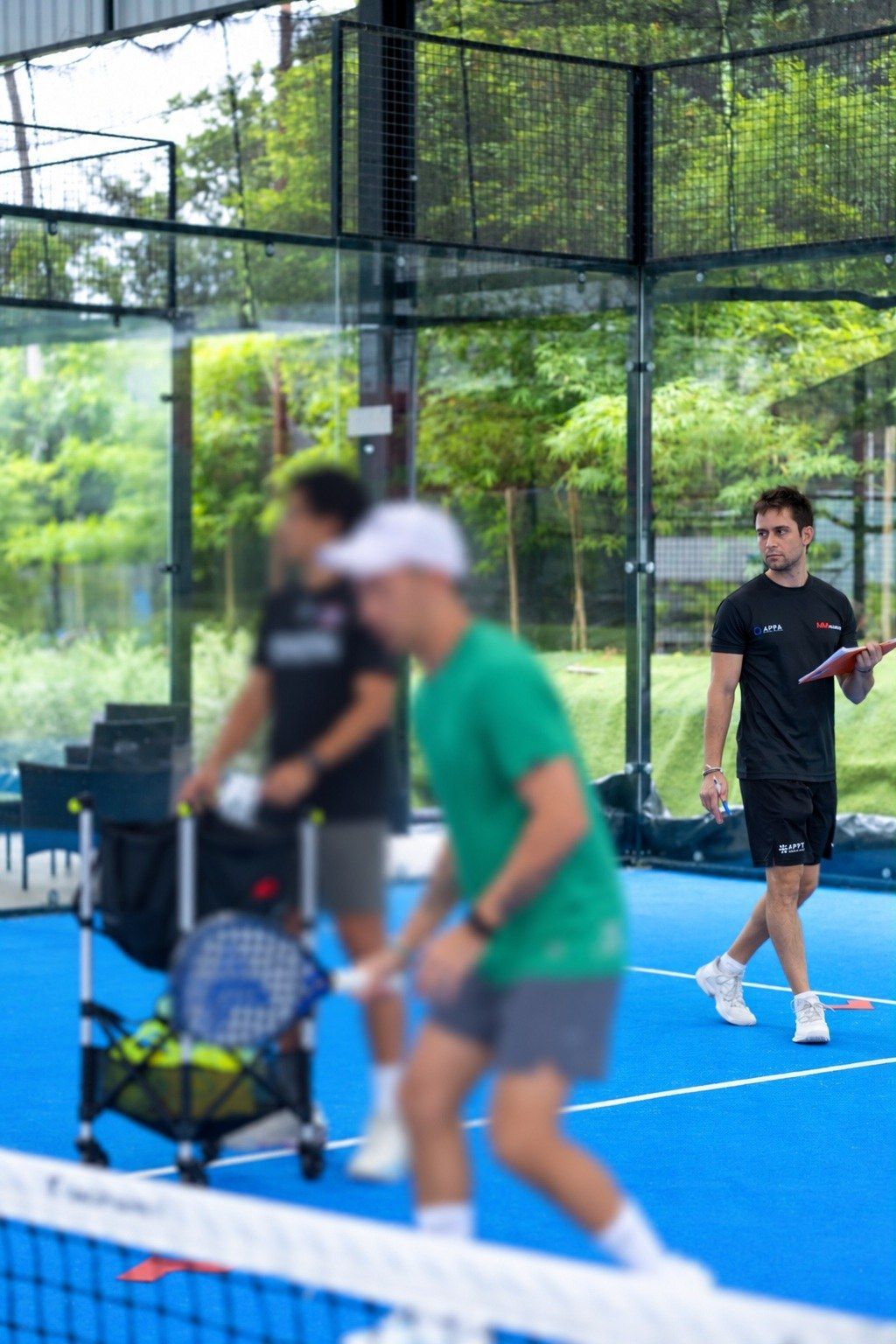
Defence
Playing from the back: staying in the point and choosing the right ball to get out of trouble.
-
Forehand & backhand
Keep the rally going from the back, with control.We build a stable, repeatable stroke, then keep it working when the ball comes faster or lower, or further from you so you have to move to reach it.
- Grips
- Ready position
- Moving to the ball
- Spin
- Direction and depth
-
The lob
Push the other pair back and take the net. Also: TransitionsWe work on when the lob is the right ball: when the ball you receive gives you enough time, space and balance to control it. Under more pressure, a lower defensive ball is often the better choice.
- Lobbing to win back the net
- The lob as an attacking option
- The lob off the walls
- The lob as one option on the return
-
Back-glass defence
Turn the back wall into an ally. Also: TransitionsFirst, let the ball come off the back glass and return it safely. Then read the rebound earlier, adjust your feet and choose between a lob, a low ball or an attack.
- Reading the rebound
- Losing the net and recovering it
- Emergency balls off your own back glass
-
Side wall & double glass
Handle the most awkward balls in padel.We start by reading which wall the ball hits first. Then we work on the turn (giro): turning with the ball as it comes out of the corner, so you stay in a good position for the next shot.
- The turn (giro)
- Balls that close in from the back glass to the side
- Balls that open from the side to the back glass
-
Return
Stop the server taking the net. Also: TransitionsFirst, get the return in and start the point. Then choose the return that fits the serve and your position: a lob, a chiquita or a low ball at the server, including serves that come off the side glass.
- Returning from the forehand and backhand sides
- Reading the serve
- Punishing a second serve
-
Bajada de pared
Attack the lob that comes off the back glass. Also: TransitionsInstead of only defending a high rebound, you let it come off the back glass and attack it high and in front. Depending on the rebound, your position and how much pressure you want to apply, the shot can be more controlled, or played with more rotation and aggression.
- Reading the rebound
- Playing it in the air or letting it come off the glass
- Forehand and backhand
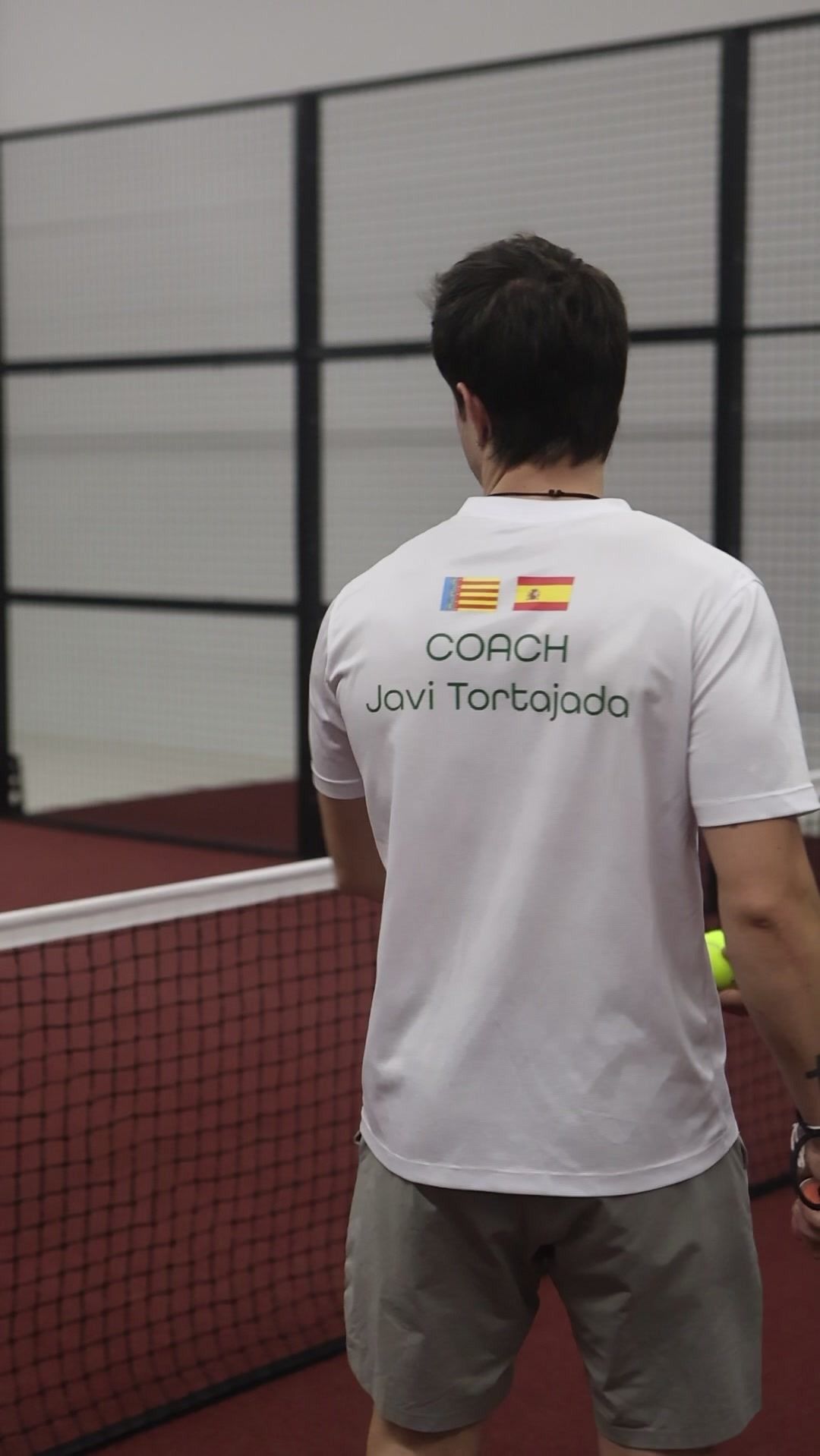
Attack at the net
Keeping the net, building pressure and finishing the point when the chance comes.
-
Volleys
Control the net, and finish from it. Also: TransitionsVolley forehand and backhand with control, and play a steady first volley after moving in. Then adapt the volley to the ball: block the fast one, take care with the low one, push the easy one deeper.
- Targets: the back glass, the side fence, the feet
- Volley exchanges at the net
- The drop shot
-
Bandeja & víbora
Keep the net when they lob you. Also: TransitionsTwo shots from the same family that keep you attacking. With the víbora the racket comes more from the side and around the ball, and you can let the ball drop a little more when your position allows it. Either can be played slow or fast. We develop the one that suits your technique and your game, and learn where each one works.
- Moving back sideways and recovering the net
- Choosing pace and target
- Deep to the back glass, or a bounce to the side glass or side fence
- Combining with the volley
-
Smash
Finish the point, or keep the pressure.The flat smash and the kick smash (hit with topspin), and deciding when to finish the point and when to keep the pressure on.
- Smashes that send the ball out of the court (por 3 and por 4), for more experienced players
- The rulo and the gancho, when there is no time to set up a bandeja
-
Serve
Start the point on the attack. Also: TransitionsServe in with a target, move in and play a first volley. Then vary direction, spin and pace to set up that volley.
- Targets: the side glass, the T, the body
- The Australian formation
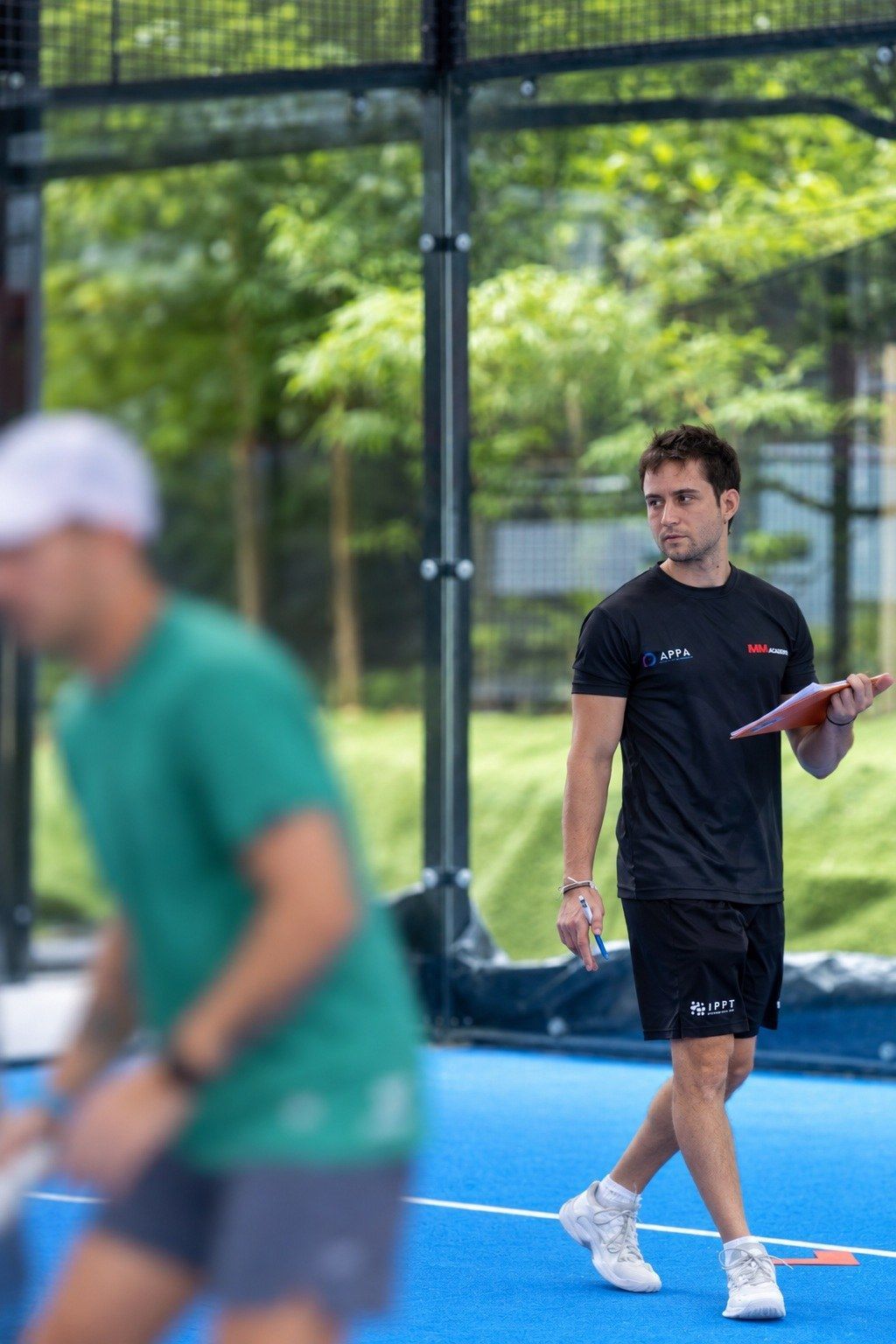
Transitions
Going forward when you get the chance, and dropping back together when you lose the net.
-
Chiquita & low balls
Win the net from the back. Also: DefenceTwo different tools. The chiquita is a soft, slow ball to the feet of the players at the net, often disguised as a lob, that gives you time to move forward. A lower, flatter ball carries more pace and is used to counterattack. We work on the touch for each, and on when to choose which.
- The chiquita on the return
- Combining it with the lob
- Moving forward together
-
Playing as a pair
Move and decide together, at the net, at the back and in between. Also: Defence · Attack at the netWhere to stand at the back and at the net, and how to move with your partner. Then covering the middle and the lob, playing the forehand and backhand sides, and choosing when to risk and when to wait.
- Important points
- Adapting to different opponents
- Going forward and dropping back together
Not on the list?
These twelve are a starting point. Shots, variations and situations that aren't here are part of the work too, whenever your game needs them.
How I coachStart with one session
Message me on WhatsApp. I'll reply personally and book the court at Sterling.